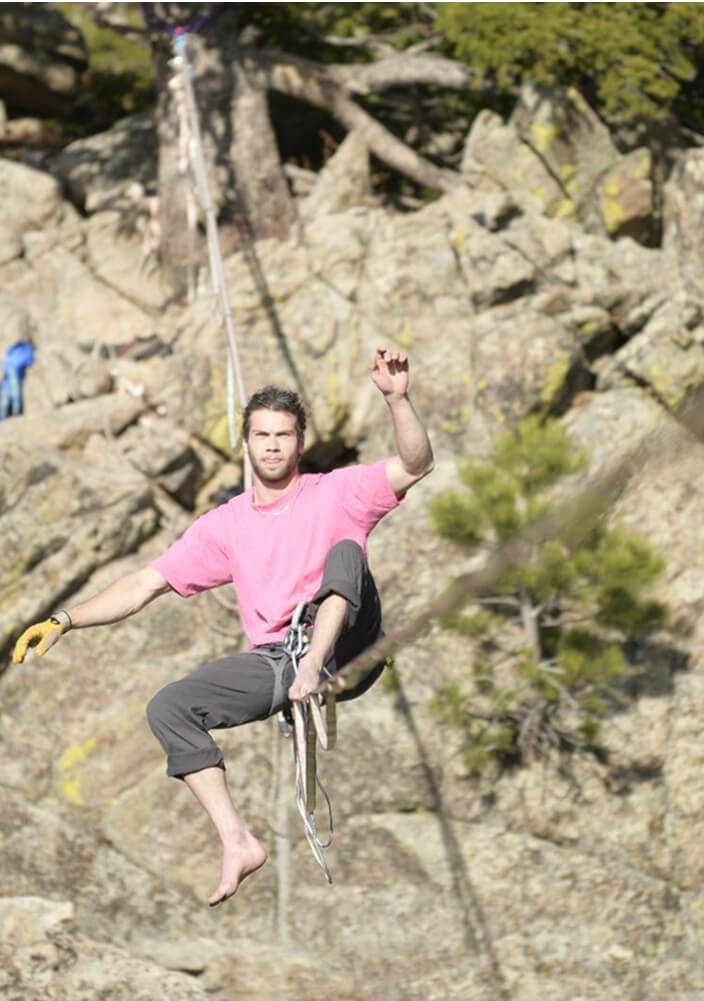
BOULDER - The sport of slacklining has remained pretty niche until recently, but is now becoming a rising subculture. Highliners, a subgroup of the slacklining community, are taking the sport to another level, from the trees at a local neighborhood park to the nauseating heights of the surrounding mountains.
Originating around 40 years ago, the last 10 years has seen a surge of newcomers, different slacklining groups, new technologies, rigging methods and increased exposure on social media. Global interest in the sport has increased as the sport has broken into many different territories.
In 2019, slacklining was used to make a political statement when Corbin Kunst, a 27-year-old ropes-course technician from Petaluma, California, balanced on a slackline connecting Big Bend National Park with the Mexican Parque Nacional Cañon de Santa Elena, hundreds of feet above the Rio Grande, as a means to symbolize trust with Mexico despite Trump’s best efforts to create a divide.
It has even been used to bring people together in holy matrimony, like in 2017 when professional slackliner, Mickey Wilson married his girlfriend, Purple McMullen-Laird, in a wedding ceremony held on a space net accessed only by slack lines in the Fruit Bowl just outside of Canyonlands, Utah, which would be the first of its kind.
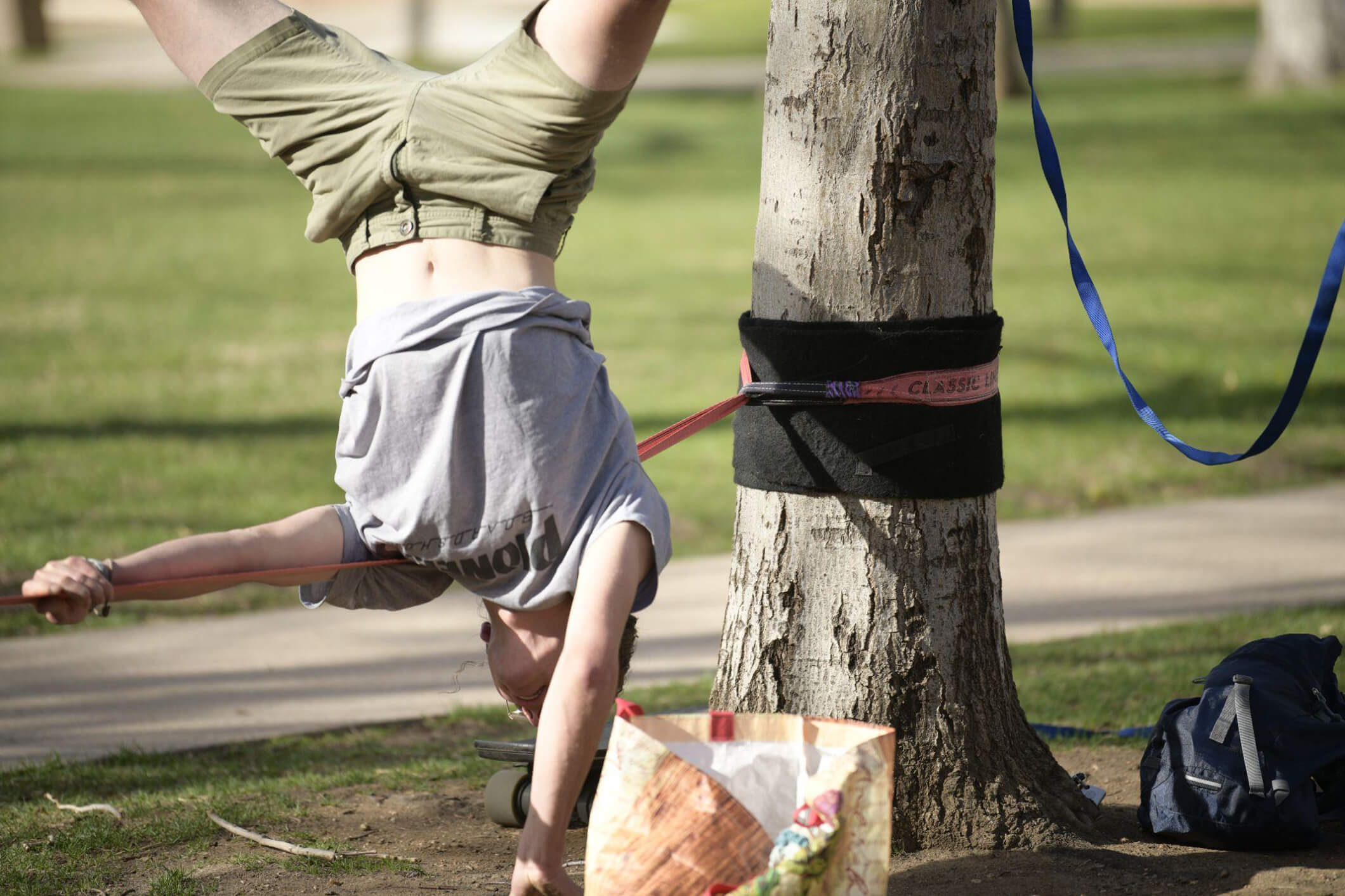
“10 years ago I would say confidently that I knew 90 to 95% of the slackliner/highliners in America but now it is getting to the point where there's people all over getting into it,” says Mickey Wilson
Slackline U.S. and the International Slackline Association are organizations that have been founded to help the community self-regulate, to share safe rigging practices, routes to accessibility, and to promote Leave No Trace ethics.
Not only is the sport growing in numbers but in variations. Such variations as waterline, highline, trickline, yogaline, and rodeoline.
What is slacklining and highlining?
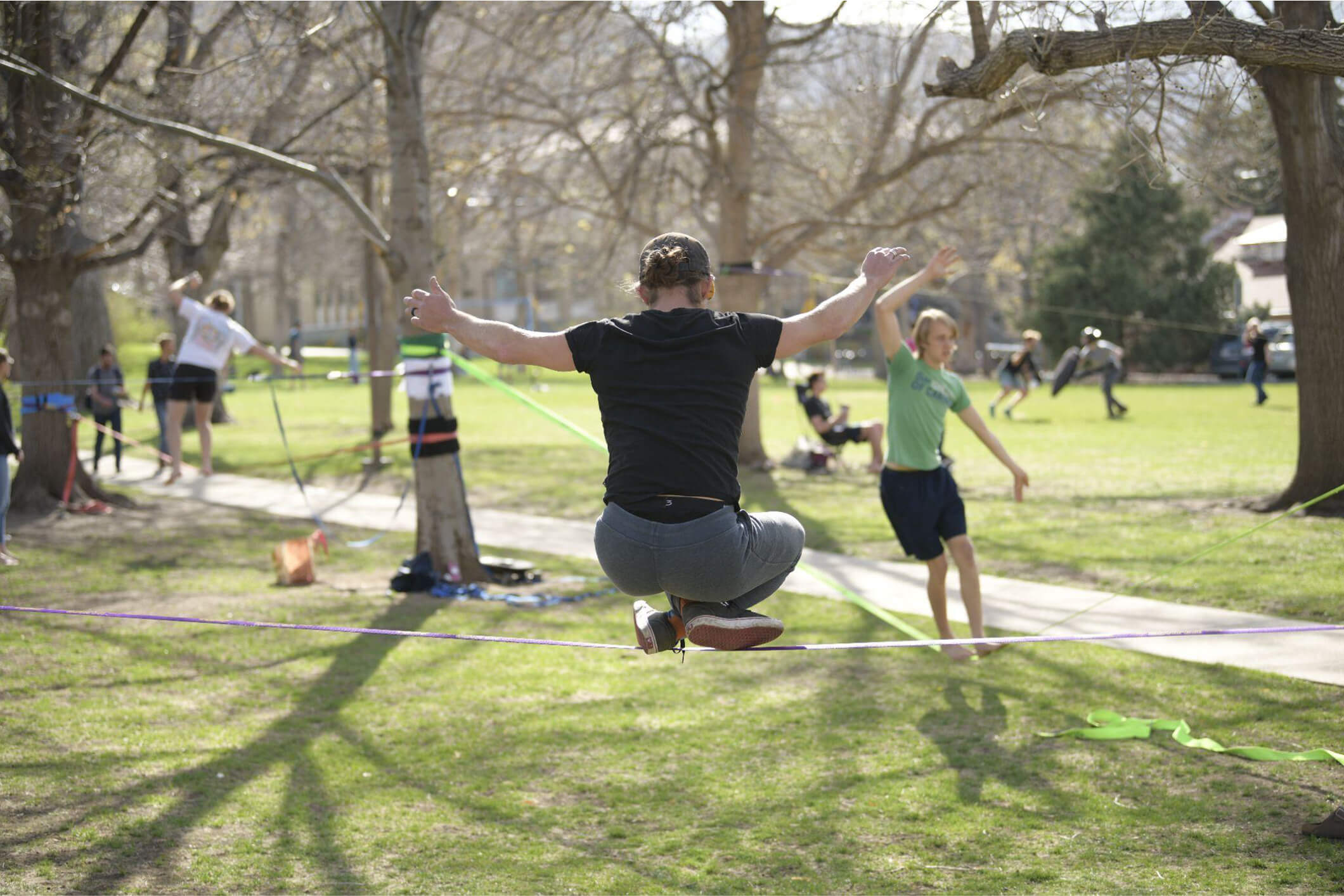
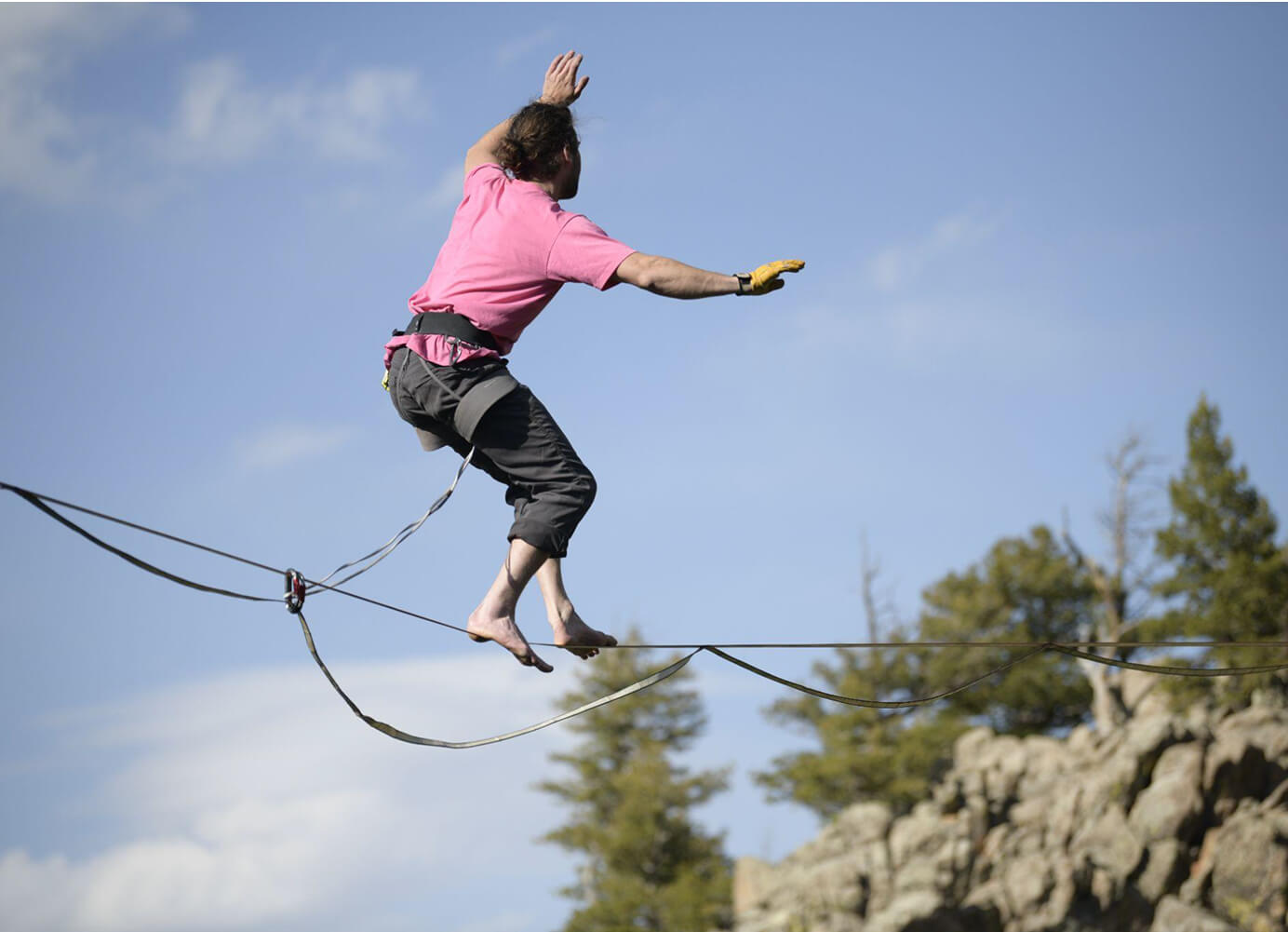
Slacklining is the act of walking, running or balancing along a suspended length of flat webbing that is tensioned between two anchors. What distinguishes slacklining from highlining is the heights by which the two are practiced. Slacklining is usually anchored between two trees at a local park whereas highlining is usually anchored across mountains, buildings, or bridges.
Will the slacklining community ever have the same size and influence of the climbing community here?
Those are pretty big shoes to fill.
— Wilson says
Climbing is known to be the big brother of slacklining, with many slackliners coming into the sport with climbing backgrounds. However this has changed in the last ten years. Wilson was one of the first generations of people to get directly into slacklining, without climbing experience.
Climbing and slacklining are similar in that both offer varying levels of intensity. There are slackliners that go highlining, and those that just like to set up in a park, and there are climbers that go big wall alpine climbing and there are people that just like to go bouldering or to a climbing gym.
Wilson says, “I think that we are still a long way off from the point where you might show up to a slackline spot and it's so crowded you can't find a spot to set up a slackline.”
One thing preventing its growth has always been the sport's steep learning curve. Wilson says,“One of the cool things about slacklining is that it really brings out the resilient parts of a person’s soul and that can be a really strong filter to who actually becomes a slackliner because pretty much nobody is naturally good at slacklining.”
How do you learn to slackline?
Slacklining is the act of walking, running or balancing along a suspended length“Unfortunately the learning curve is steeper than Arapahoe Basin” says Wilson. Wilson became one of the most prominent slackline competitors and performers in the world, but when he first tried it back in 2007 he was very discouraged as he wasn’t good at it naturally.
Unlike climbing where a beginner can go out climbing for the first day and succeed in climbing an easy route, with slacklining it is a lot of trial and error, falling and getting back up, and you definitely won't succeed on the first day.
Wilson says, “I've known people that were former gymnasts, former rock climbers, all the stuff and there's just nothing that really prepares you for learning to balance on a one-inch or two-inch wide piece of webbing.”
The learning process involves teaching your stabilizer muscles, from your feet to your ankles all the way up to your upper body, how to balance on a line.
“The problem is a lot of people try to learn to walk before they can balance on one foot,” says Wilson.
On a highline your mind is doing a lot more to control your body and you're trying to put the movement in a vice grip, which counterintuitively makes it really hard.
— Mark Bodner, resident of Boulder and a relatively new slackliner and highliner
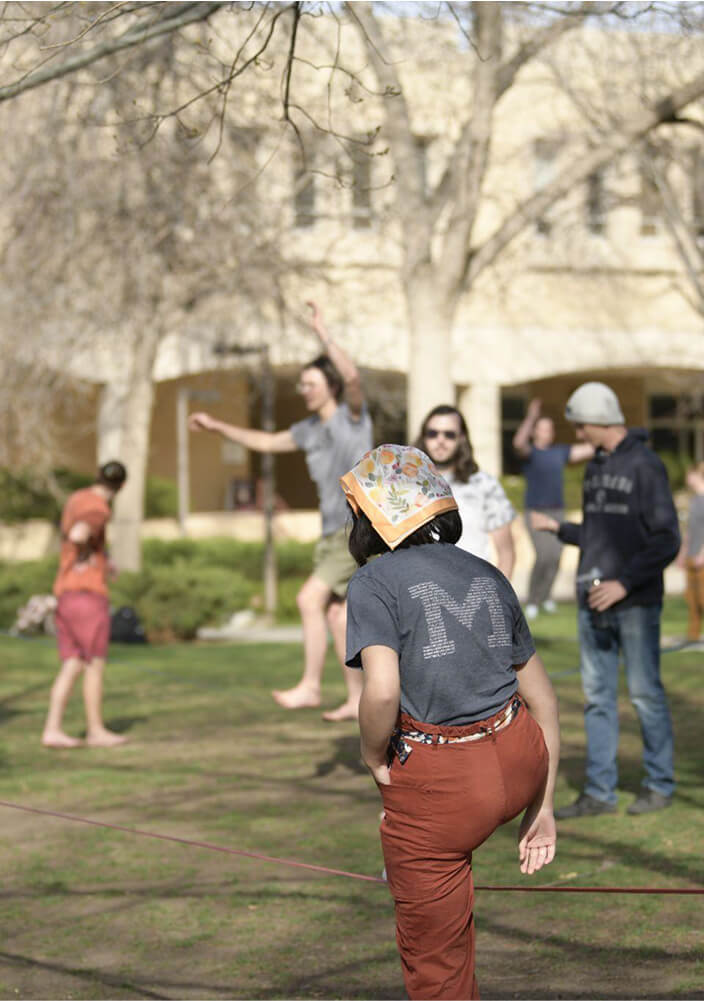
So the most important part of highlining is being able to switch your mind off, focus on your breath and just let your body do what it's learned to do.
of flat webbing that is tensioned between two anchors. What distinguishes slacklining from highlining is the heights by which the two are practiced. Slacklining is usually anchored between two trees at a local park whereas highlining is usually anchored across mountains, buildings, or bridges.
What are the basic elements of the slackline and how do you set one up?
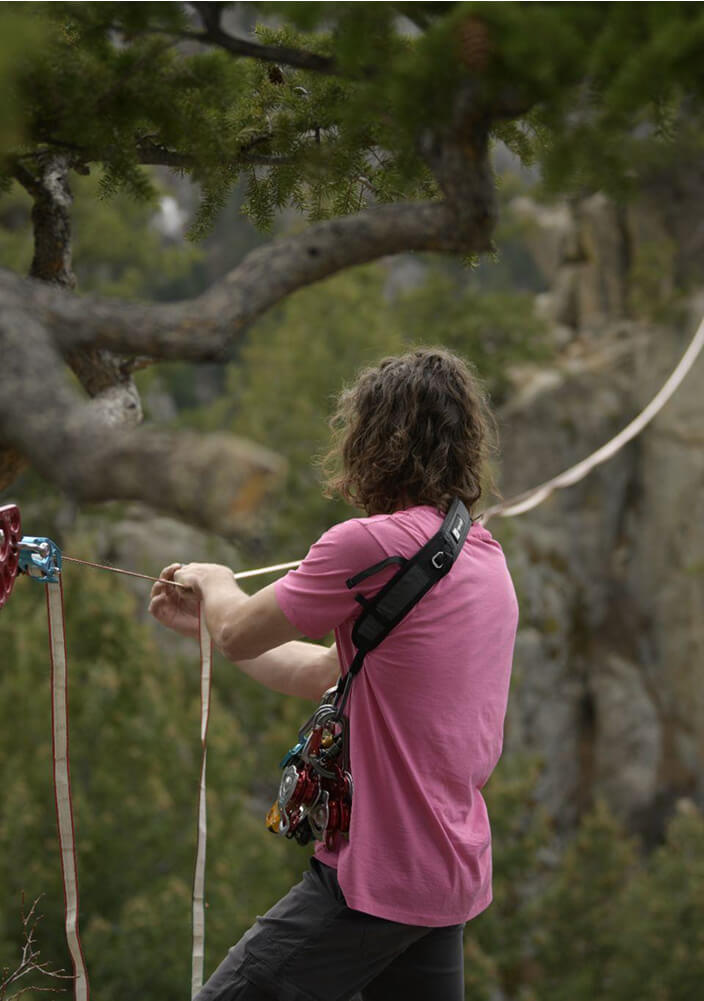
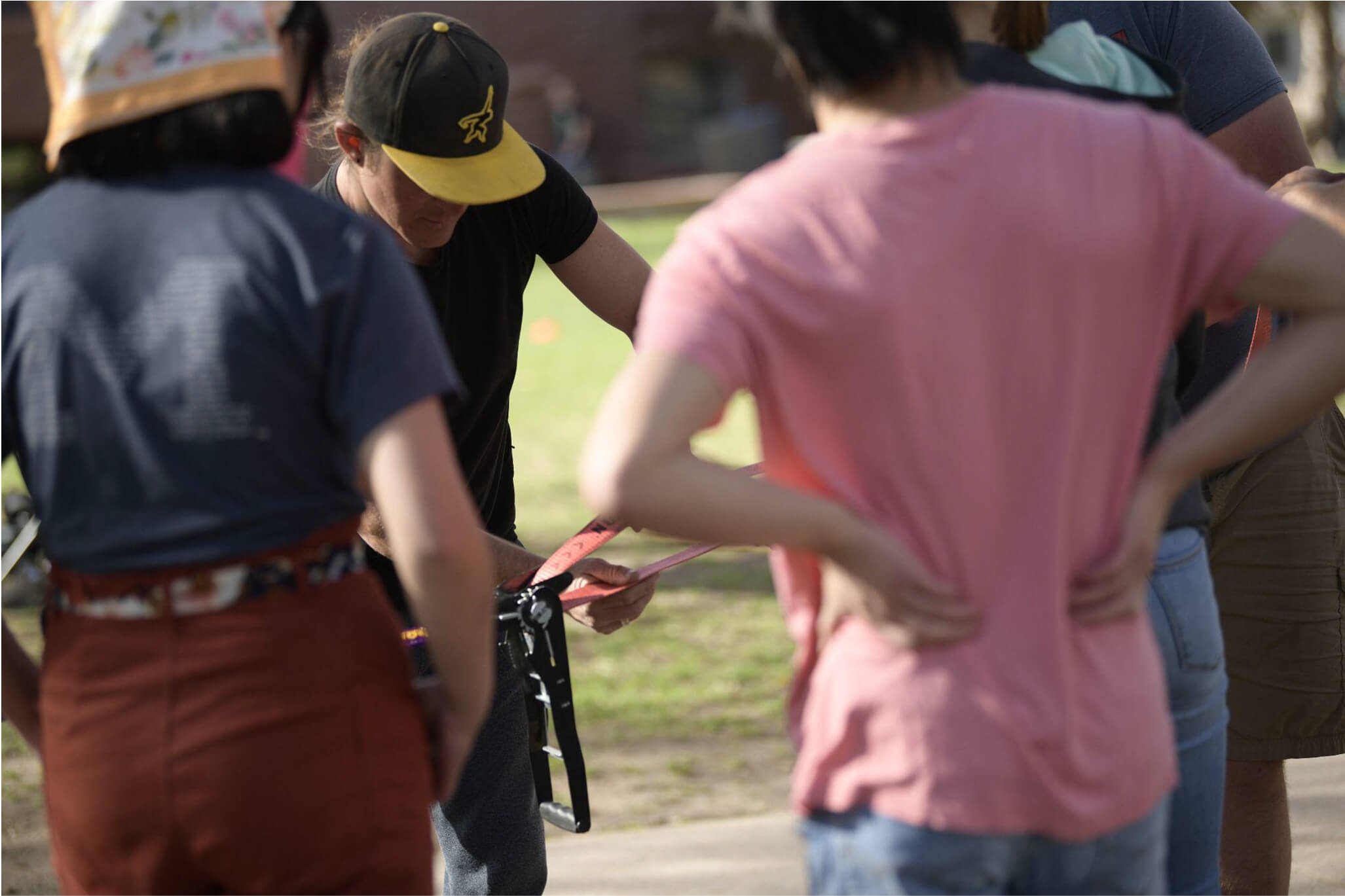
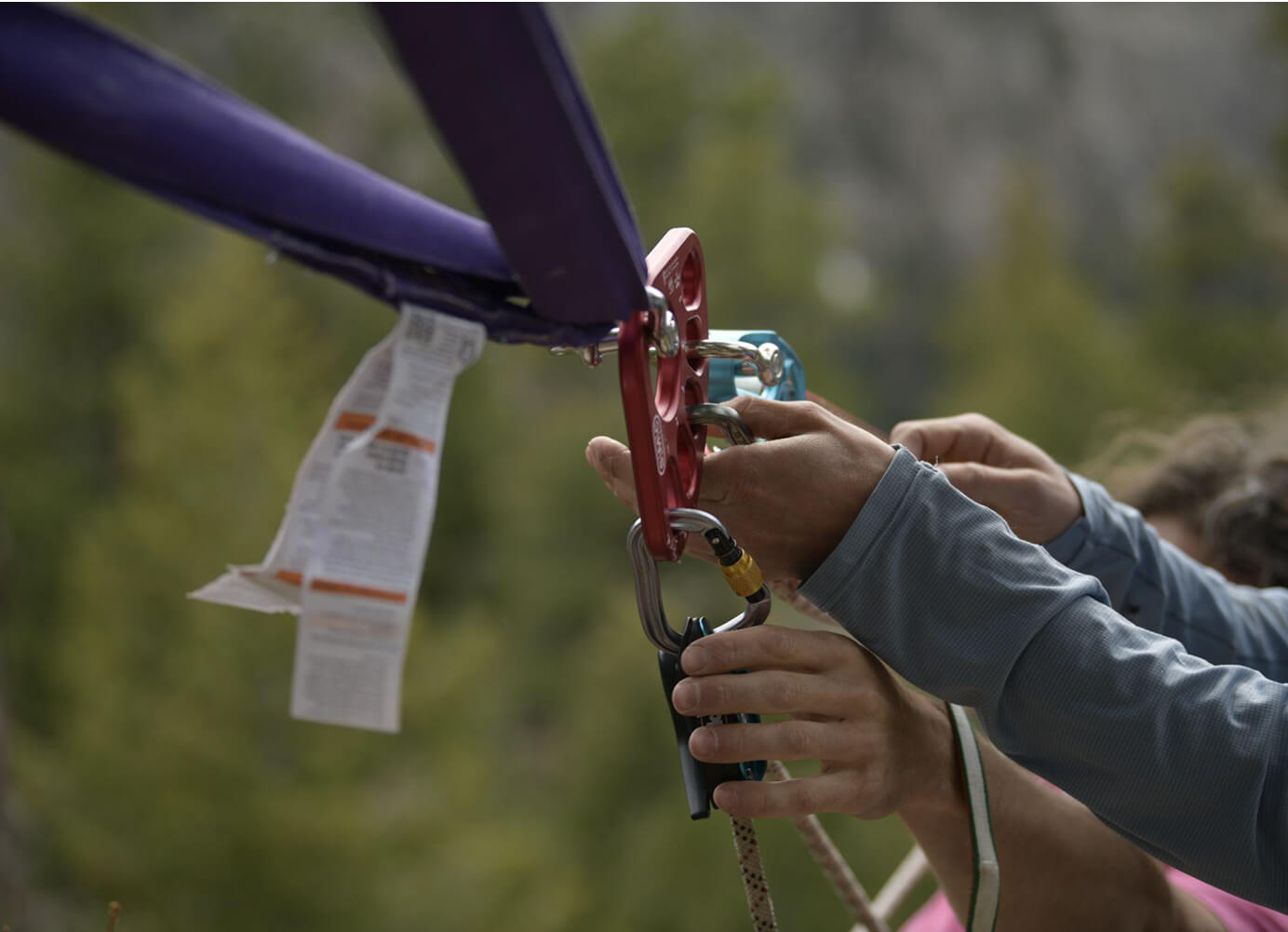
To set a slackline up you’ve got to make two anchor points with a wide strap called webbing. When anchoring the webbing to the two points, generally two trees, you want to put padding like old towels around the tree so that you're not damaging the bark and then some type of metal hardware to create the anchoring system. Instead of tying knots in the webbing you create folds, folding it onto itself and clipping carabiners into the folds or using ratchets. You will want to create tension and tightness in the line and ratchets are a good way to do so.
When you're learning, the slackline is generally attached between two trees pulled very tight, at a very low height and at a very short distance and then as you get better you start rigging your slackline between trees that are further apart, you start rigging it higher up and looser.
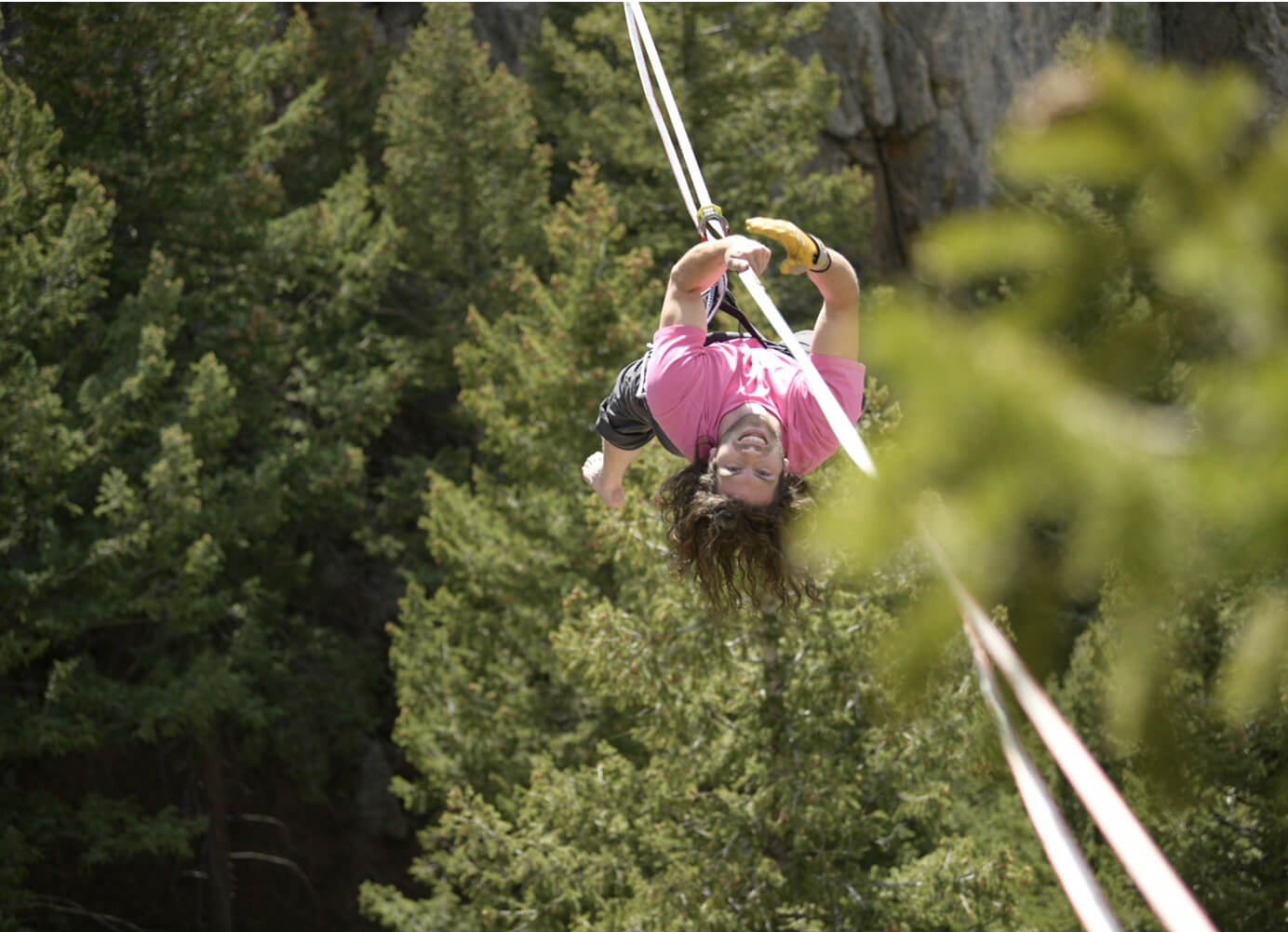
How do you get past the fear of heights?
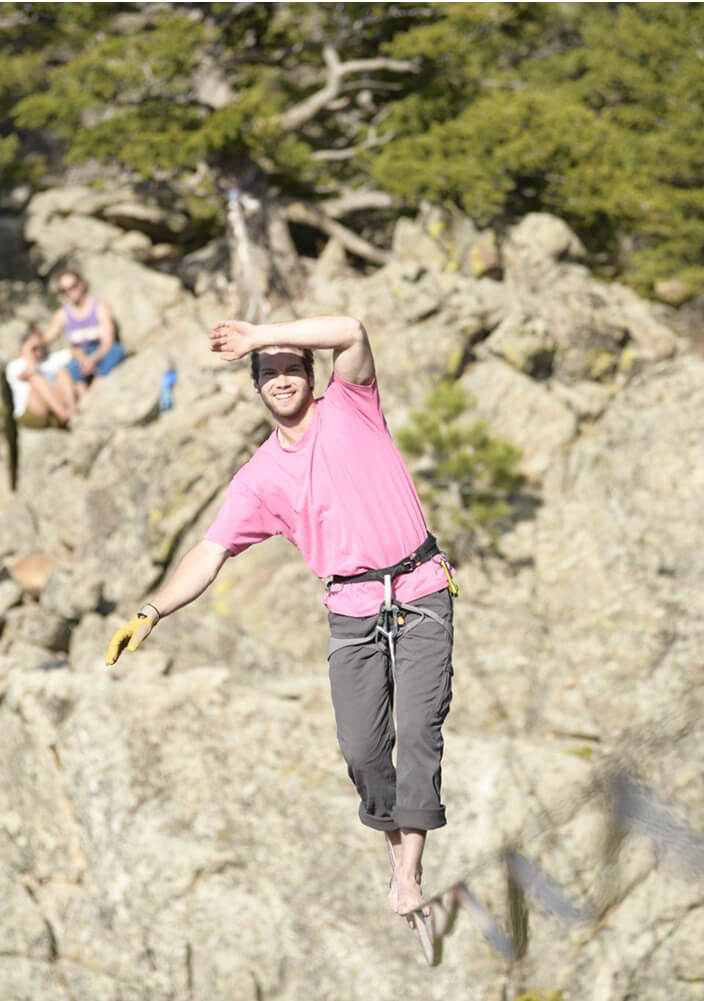
“Different people are wired differently. Climber Alex Honnold doesn't feel fear because his amygdala in his brain is not very active, but for everybody else there is an inherent intrinsic fear of heights and whenever you get on a slackline there is a visceral pull in your body and mind that doesn't want to do it” says Wilson.
However, how you get past the fear, at least for Wilson and Bodner, is the trust in the mechanics, physics, and manufacturing of the gear they are using. Wilson claims, “It's the safest extreme sport in the world” saying “I myself have fallen off the highline thousands of times and it's caught me everytime.”
Statistics
According to a survey conducted in May 2013 by Jürgen Röhm the majority of slackliners are in their 20s and 30s with 54% of slackliners being between the ages of 18-24 and 37% being between 25-34 years. Teenagers between 13-17 do not seem to be interested in slacklining. In addition it remains a heavily male dominated sport with females only making up 11% of the demographic.
Wilson, who is a professor of slacklining at Colorado School of Mines seeks to change the demographics as he introduces more young adults to the sport.
The study also found that the majority of slackliners have been slacklining between either 1-2 years (43%) or 3-5 years (34%). Only about 8% of the respondents have been slacklining for longer than 6 years and according to Röhm those are likely the people who picked up on slacklining in its early days, through the rock climbing community.
What are the best aspects of slacklining?
For Wilson it is a sport that is both individualistic and collaborative, “You get boths sides of the coin, you get this solitary meditative element and this really awesome communal element as well.”
For Bodner, the best part of being on the line is the drop away of everything around you. “I had it most distinctly in Joshua Tree when I was on this big line, I spent all morning rigging it, and I finally got on top of it and there were climbers around and there were cars driving about a mile away. But when I was just focusing on the line and on my breathing and trying to meditate through the fear everything dropped away and it was like standing on mars.”
As more people are willing to put in the dedication and motivation to learn the sport of slacklining, the stronger its community roots will become in Boulder. Right now in Clear Creek Canyon there are an estimated 100 to 200 established slacklines with either bolted or natural anchors for the community to use whenever they want.
Balance is not intrinsic, but we are programmed to do things like this, look at our primate ancestors monkeying around on vines and stuff.
— Wilson says